

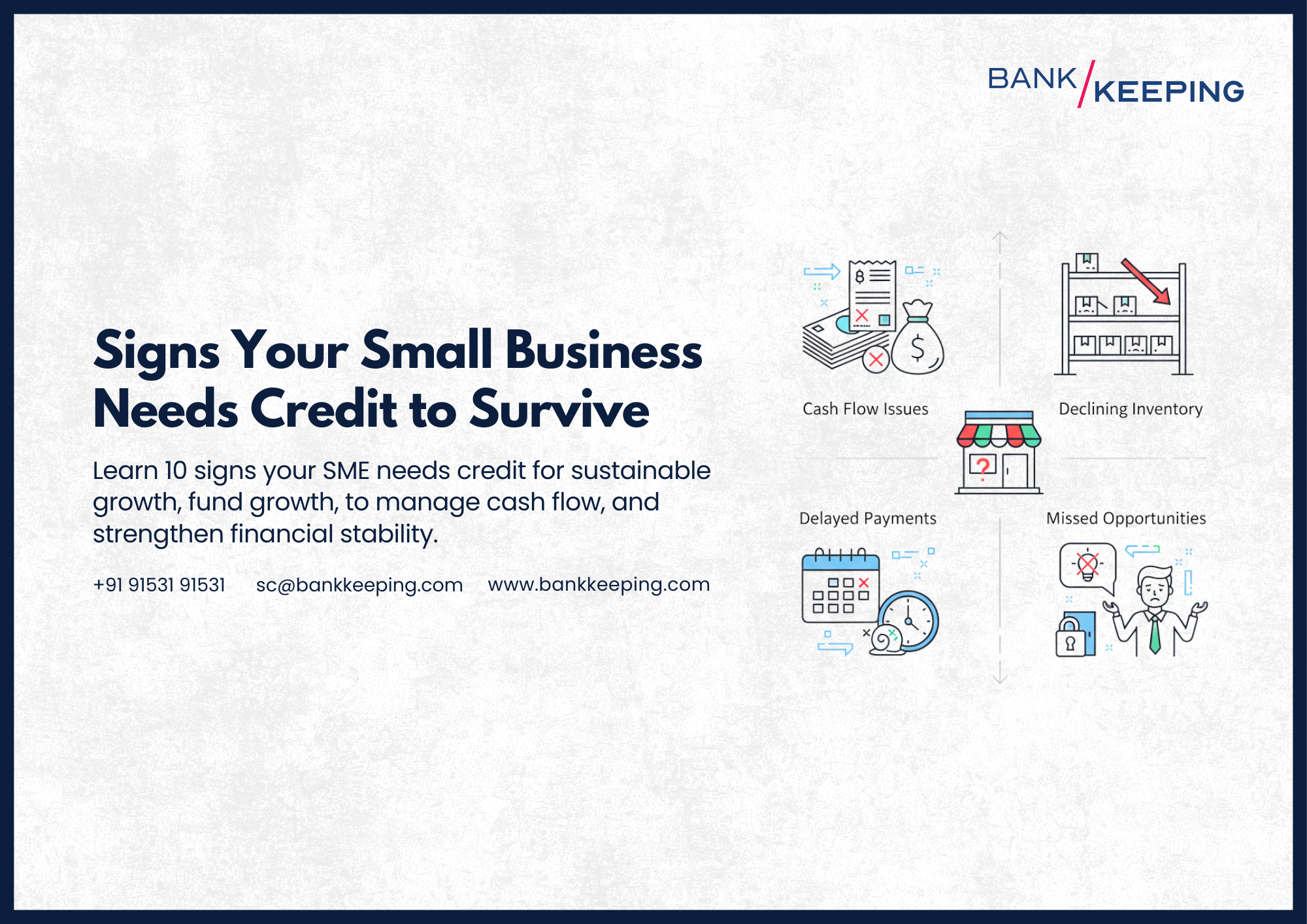
Certain entrepreneurs view debt financing as a last resort to be considered when finances are in a tight position. Strategic funding acts as a viable tool for business growth, security and sustenance in the long term. Whether the aim is to enhance market share or maintain cash flows, securing funds at the right time can make all the difference.
Nonetheless, it is critical to understand when to seek business loans. Obtaining loans too soon could make an organization heavily reliant on debt. But, holding out for too long could result in missed opportunities and financial distress for the business. This article discusses key signs where organizations should consider seeking business debt for continued business growth and prosperity.
Top 10 Signs Your Business Needs Credit
1. Cash Flow Gaps Are Hurting Operations
When funds go out of a business even before revenues arrive from customers or clients, cash flow gaps occur. Such frequent inconsistencies might affect operations making it difficult to navigate recurring business expenses or take on additional responsibilities.
Entrepreneurs struggling to fulfil immediate expenses are forced to use personal funds while awaiting payments from customers. Seasonal businesses may also face uneven cash flows during off seasons.
Accordingly, businesses that are unable to manage operations daily until customer/client payments arrive is a sign that a business needs credit. Such cash flow gaps can be filled by a short-term loan that can help to sustain operations and maintain financial health.
2. Missing Out on Growth Opportunities
Growing a business necessitates continual infusion of investments. At times, access to funds at the right time could differentiate just sustaining operations and scaling them. Lack of funding could cause loss of growth opportunities i.e. seizing a larger contract, employing skilled or experienced staff, increasing manufacturing capacity, etc.
Organizations may secure debt funding to take advantage of growth opportunities without exhausting their cash reserves. Instead of waiting until the enterprise has enough capital for growth purposes, funding enables investment in growth opportunities and generates higher revenues.
3. Multiple Debt or High Interest Debt
While most organizations have debt, when several loan payments crop up around the same time, it may deplete cash reserves. If a significant portion of business income goes to debt commitments, it would leave lesser or no funds for growth investments.
If managing debt is getting difficult, consolidating with a business debt may be an excellent option. Consolidating multiple business debt could simplify loan repayments, reduce effective interest and monthly payments for the organization. Freeing up cash flows will help organizations to focus on their enterprise growth rather than worrying about managing repayments.
4. Expansion into New Markets
Any business performing well within certain markets would want to expand its presence over other markets. It could be either through setting up a new branch, expanding into new markets, or investing in digital platforms. It may require adding product lines or staff, expansion typically includes additional operational costs. Many of these costs will be incurred even before it can bring any new revenue. Thus, foraying into new markets demands significant upfront investments.
Even for most profitable organizations, it would be impossible to dedicate large chunks of capital solely on expansion as it might end up in a working capital shortage.
Leveraging business loans could help to finance business expansion without placing an excessive burden on ongoing operations. Credit replenishment may help a business’s long-term strategic growth and revenue
5. Need a Financial Cushion for Unexpected Expenses
No matter how well an organization operates, there could be instances where an organization could come across unanticipated costs. Machine failures, supply chain disruptions, or even sudden economic shifts may lead to sudden expenses. However, sole reliance on limited cash reserves could be tricky as crises could occur once funds have been committed elsewhere.
Thus, organizations should seek short-term capital to effectively operate and sustain their operations without the risk of running out of financial resources.

Don’t miss the signs for a credit need!
6. Struggling to Keep Up with Payroll or Overhead Costs
Although most businesses aim to maintain their business expansion while generating more revenues but fail to do so. It is because issues such as overdue client invoices or unforeseen maintenance bills may come across as the biggest challenges.
Businesses managing cash flows through juggling payments or extending timelines signifies overextension of working capital. Lack of financial resources to manage daily expenses (utility bills, stock purchase) could also adversely impact employee retention and financial health of the enterprise.
Access to short-term credit facilities (working capital loans or line of credit) can act as emergency funds to mitigate cash flow instabilities. Not only this, it allows organizations to retain skilled labour, fulfil financial commitments on time and sustain business operations in the long term.
7. Need New Equipment or Technology
As a business advances, the need to expand production capacity becomes more than necessary. Adoption of latest tools and technologies helps to maintain efficiency and competitive edge. Utilizing obsolete machinery, outdated applications or infrastructure could reduce quality or volume of output, hamper operations and enhance maintenance costs. Availing innovative financing solutions i.e. equipment financing facilitates acquisition or lease for the same. Choosing such financing solutions could also help to have operational automation, better performance, and maintain competitiveness while managing cash flows proactively.
8. Increasing Delays in Supplier or Vendor Payments
Businesses frequently falling behind on supplier/vendor payments signify imminent credit requirements to regulate their cash flows. Such delays often happen when cash inflows (payments from customers) are slower than cash outflows (like purchasing materials or paying bills). Failure to make payments timely may strain business relationships, loss of discounts, create legal disputes and cause irreparable harm to the organization’s reputation.
Business loans offer flexible repayment solutions enabling swift payments to the vendors and suppliers without affecting business operations. Meticulous planning and smart use of loan limits could also result in favourable terms, payment discounts, and improve profit margins for the organization in the long-term.
9. Inadequate funds to cover marketing expenses
Marketing is a key business function for every organization. Businesses rely on marketing tools and techniques to build and boost their presence. It helps to attract new clients, retain existing ones and maintain an edge over competitors. Further, advanced CRM solutions can help businesses to monitor and manage their customer database efficiently facilitating introduction of new products or services with just a click.
In the digital age, marketing functions require constant investment in advertisement and branding activities. However, in the event of financial distress marketing budgets are the ones to be sacrificed leading to reduced brand focus and visibility. Failure to allocate adequate funds towards marketing purposes may be a sign indicating impending need for credit to support growth efforts.
Acquiring credit facilities like small business loans or line of credit allows them to fuel marketing functions without straining operating capital. Strategic credit usage towards marketing could advance sales, expand reach, and improve brand recognition, eventually boosting revenues to repay debt faster.
10. Ineligibility for debt financing
Regardless of the size or level of operations of a business, it is of utmost necessity to establish and maintain a good credit score. Low or no credit score could have a negative impact on the financing prospects for an organization.
Even if there is no imminent requirement for credit for an organization, smart use of credit limits could position it for success later. Possessing a strong credit score allows better access to financing during expansion, upgrading infrastructure or handling emergencies all of it at minimal cost of borrowing.
Therefore, availing manageable forms of credit i.e. business credit card, small loan, or line of credit along with consistent repayment history helps to build or boost creditworthiness of a business. It signifies responsible credit management and financial discipline on the part of the organization.
Conclusion
Therefore, recognizing early signs of credit requirement is not indicative of any weakness for the organization. It is a strong indicator of financial acumen, foresight and responsible credit management that allows entities to take right decisions before it’s too late.
Debt financing has the potential to be a critical instrument for resolving temporary fund shortages, encouraging growth and long-term resilience with effective utilization. Rather than waiting around for financing issues to compel the organization to seek credit, they should adopt smart planning. It starts with determining the right amount of funds required to fulfil business requirements and seeking lenders offering funds at flexible terms as per business requirements. Organizations who are able to understand the timing and scope of their credit requirements are adaptable and fully prepared to face unanticipated obstacles with confidence.
FAQs
What can be the signs that a business needs credit?
A few signs that indicate the need for credit are when cash flow gaps start affecting operations, growth opportunities are being missed due to lack of funds, or when short-term obligations like payroll and supplier payments become difficult to manage.
Is taking a business loan a sign of financial instability or weakness?
No, on the contrary, it is a strong indicator of financial acumen, foresight and responsible credit management that allows entities to take right decisions before it’s too late. Servicing your credit on time also increases your credit scores leading to better goodwill.
Why is it important to maintain a good credit score?
Possessing a strong credit score allows better access to financing during expansion, upgrading infrastructure or handling emergencies all of it at minimal cost of borrowing.
What types of loans can a SME business avail?
An SME business can access both fund and non fund based loans like, working capital loans, packing credit, Overdraft, expansion credit, LC etc. It may also be eligible for various government initiatives like PMEGP or special loans like GST loan. The type of loan taken will depend on the needs of the SME business.
What will happen if a business misses the signs for credit need?
Not knowing the signs a business needs credit can lead to missed growth opportunities, strained supplier relationships, loss of skilled staff due to payment delays, and even operational shutdowns in extreme cases.